The PTC
3
min read
Published on
November 19, 2026
November 19, 2026


A property-market reset, urban-renewal priorities, and factory automation each tell a different part of the story.
China’s 15th Five-Year Plan for 2026–2030 was approved on 12 March 2026. It emphasize sscience and technology selfreliance, indigenous innovation, advanced manufacturing, and industrial applications of AI and robotics. The Congressional Research Service describes this as a broad national policy framework, not a forecast of adoption in any one sector.
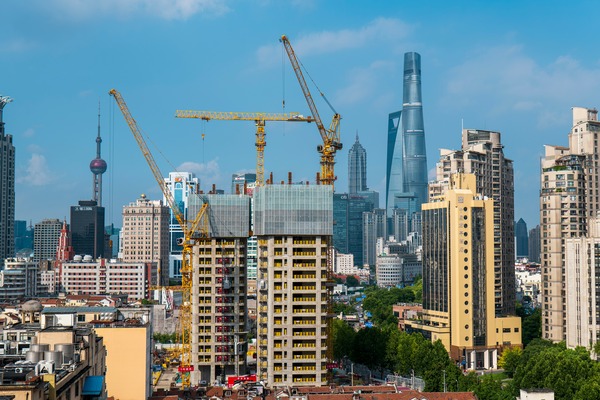
For property and construction, the sector-specific signal is clearer: China’s housing and urban-rural development minister has highlighted high-quality housing, urban renewal, and construction industry upgrading, including intelligentconstruction and green buildings. These are stated priorities; delivery and commercial uptake will vary by city, project and workflow.

A balanced read: the CRS also flags structural pressures, including “strong supply and weak demand.” Technology policy is a direction of travel—not proof of a near-term construction boom or a guaranteed return on investment.
How will firms adapt when property development is under pressure butpolicy is also pushing quality, renewal and modernization?
The answer is unlikely to be “AI everywhere.” It will depend on specific assets, project economics, data quality and whether a tool fits the way work is actually delivered.
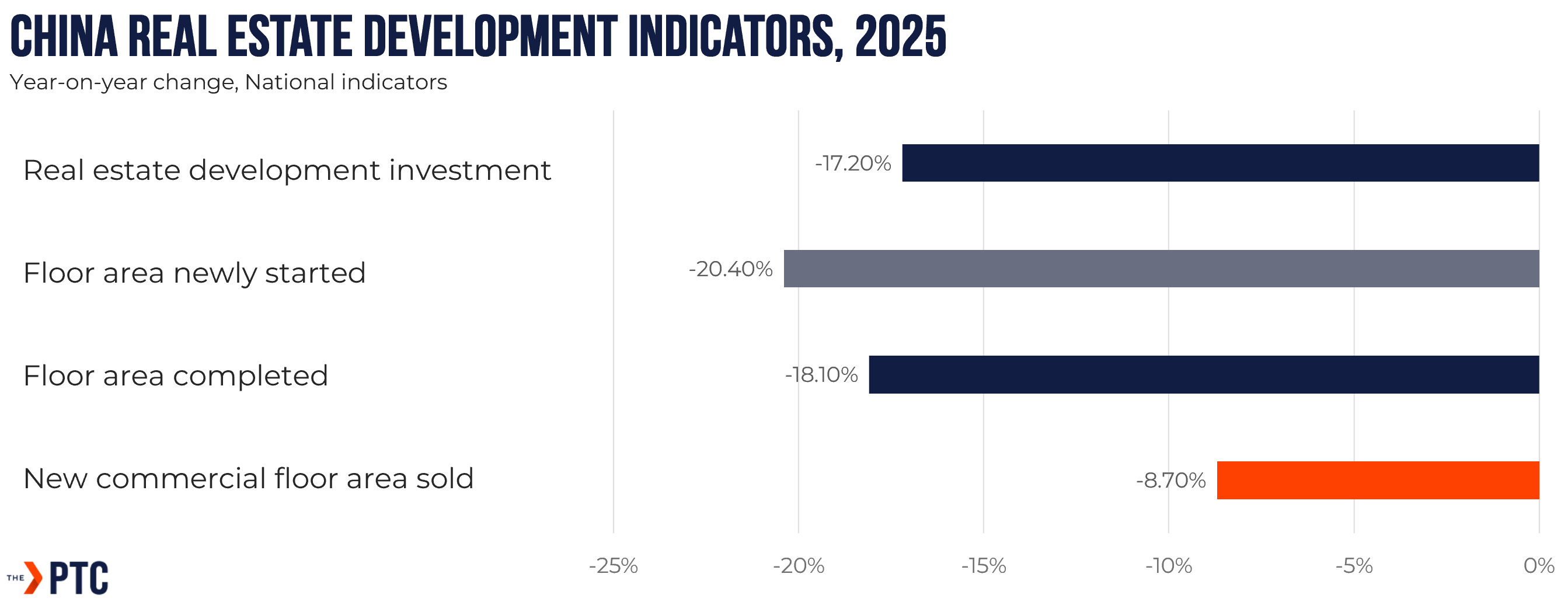
China’s National Bureau of Statistics reported that real estate development investment fell 17.2% in 2025; floor area newly started fell 20.4%; floor area completed fell 18.1%; and newly built commercial floor area sold fell 8.7%. These figures describe real estate development enterprises, not the whole construction industry—and they are evidence of current pressure, not a 2026 forecast.
The government’s 2026–2030 urban-renewal plan calls for better use of underutilizedland, life-cycle safety management for housing, “quality homes,” and upgrades to municipal infrastructure. A January 2026 ministerial interview also reported 26,000 old residential-community renovations and 14,000 elevator installationsin the previous year, benefiting more than 4.7 million residents.

AEC lens: watch for work tied to existing buildings and urban systems—retrofit and building-services upgrades, accessibility, safety and resilience, plus digital/green construction. Treat these as areas to investigate, not confirmed project pipeline or guaranteed demand.
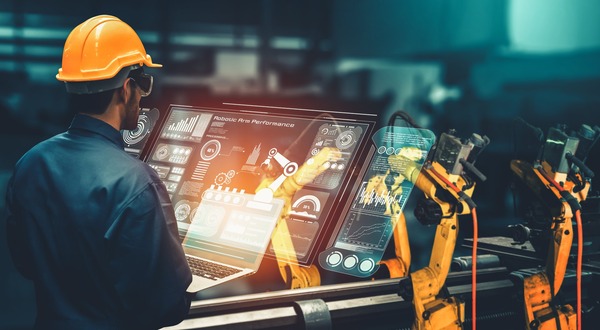
The International Federation of Robotics reports that China installed 295,000 industrial robots in 2024 (54% of global installations), had more than 2 million industrial robots in operation, and Chinese manufacturers reached 57% of the domestic industrial-robot market.

Factory automation is not the same as construction-site robotics. For built-environment decisions, separate automation in off-site manufacturing from work on a live construction site and from the operation of completed buildings. Examples worth assessing—not claims about adoption scale—include fabrication, logistics, inspection, surveying and building operations.
· Mapby project stage. Separate design, off-site production, site work, renewal and building operations; distinguish routine use from pilots.
· Start with repeatable work. Check data readiness, safety, standards and integration with existing design or project systems.
· Measure the result. Use clear time, quality, rework or safety measures, with qualified professional review where required.
A one-hour Chinese AEC landscape & innovation workshop
We’ll cover current adoption and innovation maturity, with a real estate and construction lens. Teams can also leave with:
· A use-case map across new build, urban renewal, off-site production, site work and building operations—separating scaled use from pilots.
· A view of opportunity and blockers, including data, standards, workflow integration, skills and procurement.
· A prioritized shortlist of pilot candidates, with questions and measures to test before committing.