The PTC
4
min read
Published on
July 23, 2026
June 18, 2026



For decades, the real estate industry treated buildings as static objects, frozen in whatever state they were in at the moment of handover. Today, that paradigm is collapsing. We are moving from a world of "mirrors" (visual replicas) to a world of "minds" (predictive intelligence). Digital twins have evolved from simple 3D snapshots into live, autonomous engines that simulate complex behaviours based on real-time data.
The shift from static 3D models to live, predictive digital twins is rapidly transforming real estate from a sector managed by lagging indicators to one driven by proactive, real-time intelligence.
The global digital twin market was valued at $24.48 billion in 2025 and is projected to reach a staggering $384.79 billion by 2034, growing at a CAGR of 35.40%.
This growth isn't just about "better graphics." Modern digital twins now include AI and machine learning to move beyond mere visualisation (Descriptive) to predictive and prescriptive analytics (Autonomous), allowing for automated, self-healing, and self-optimising systems.
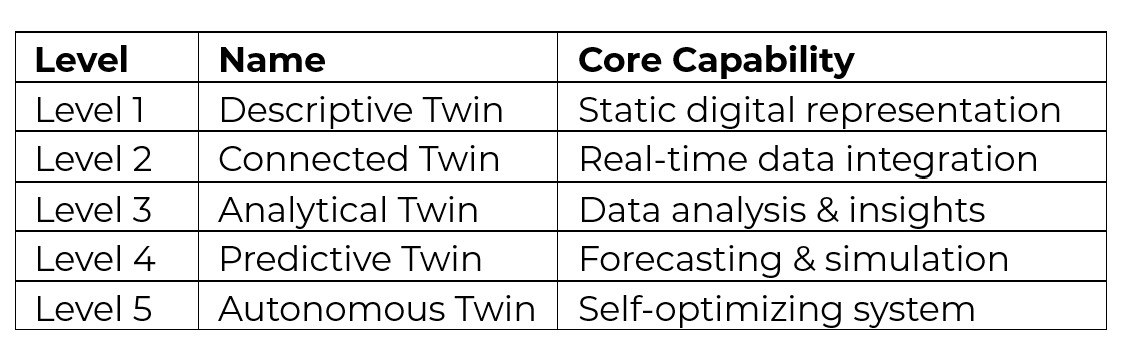
The adoption is spurred by the need for sustainability, energy efficiency (up to 50% reduction in carbon emissions), and predictive maintenance (reducing downtime by up to 45%).
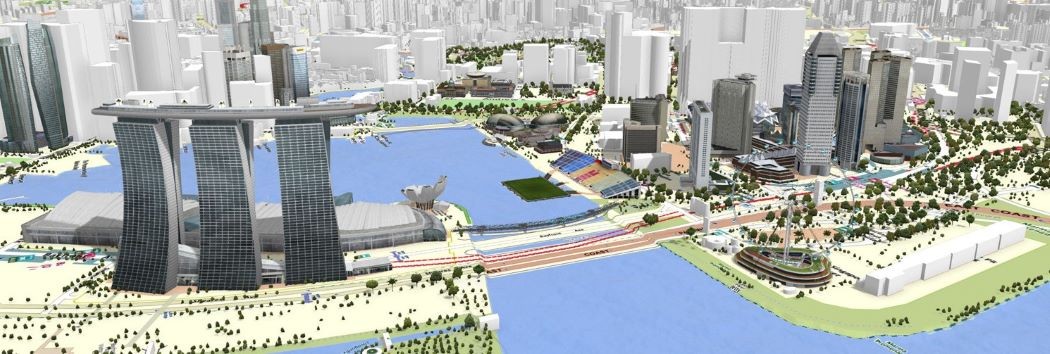
Virtual Singapore: The Open-Access Pioneer
Put simply, Virtual Singapore is a 3D digital model of Singapore, built in intricate detail. Users can navigate through this virtual city and explore it like never before, with access to all kinds of information and points of view.
In addition, the model is also crammed with real-time, dynamic data, which can be used in simulations and virtual tests of new solutions to urban planning problems.
By layering all kinds of data on top of a 3D landscape, Virtual Singapore gives city planners a holistic, all-seeing view of the city-state. This lets them draw connections between disparate parts of the city and explore potential far-reaching impacts of proposed changes.
With open access to its base layer, private developers don't have to waste capital re-mapping the city. They can simply "plug in" their building’s intelligence to the government’s digital skeleton.
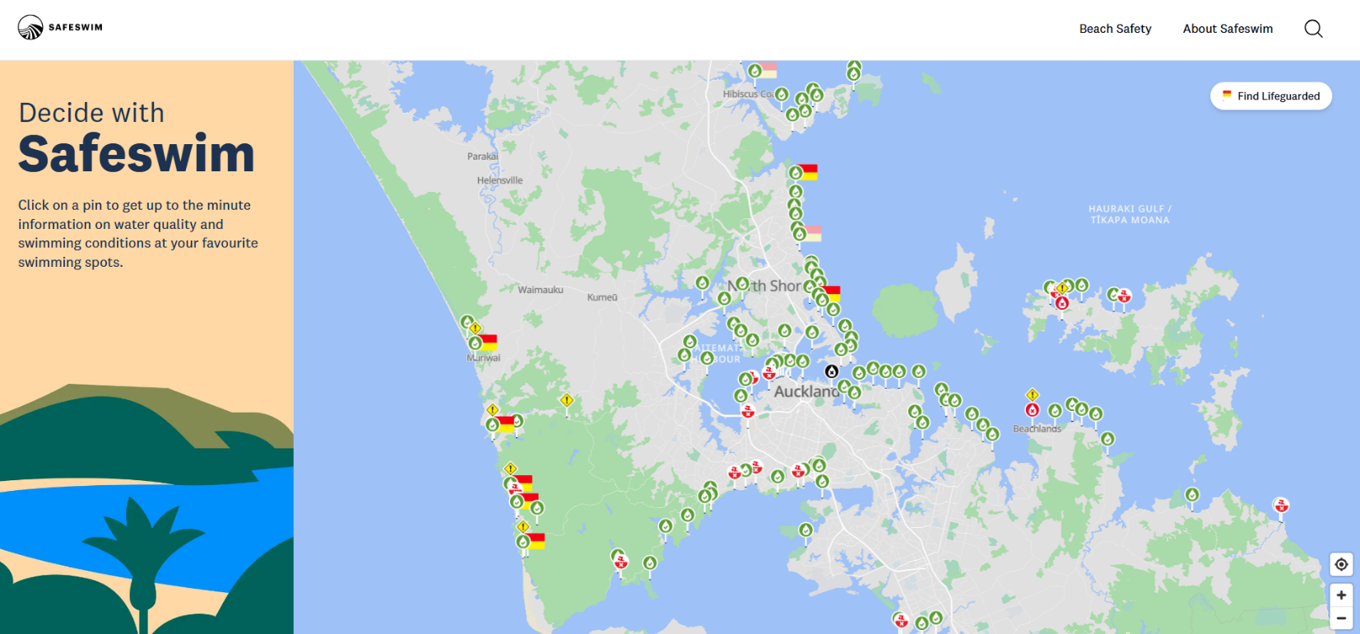
New Zealand: Infrastructure Resilience + Safeswim
Auckland’s Safeswim is a web-based digital twin which provides real-time information on the water quality and the associated public health risk of swimming at Auckland's beaches. The tool uses predictive analytics to integrate data from various sources and translates them into simple risk indicators for the public. The platform has improved the accuracy of water quality predictions from less than 20% to greater than 80%.
It shifted the city from "wait-and-see" physical testing to a forecasting model that has increased public awareness by over 11%, significantly reducing the public health burden on the economy.

The Middle East: NEOM and the Cognitive City
Giga-projects like NEOM’s The Line are being built as "cognitive cities." Unlike legacy cities that are "smart" via retrofitting, NEOM is designed as a zero-gravity urbanism where every layer of infrastructure is continuously optimised by a master twin.
By eliminating cars and roads, the digital twin manages a vertical community for 9 million people, aiming for 100% renewable energy and zero-carbon living by automating 95% of city logistics through the twin's "brain."
To truly unlock value, we must bridge the gap between a single building and the urban infrastructure it sits on. This is why citywide digital twins are becoming essential. When a city implements a digital twin, it provides a "Single Source of Truth" that eliminates the silos between architects, city planners, and asset managers.
When public infrastructure data is open, it allows private owners to simulate how their asset will interact with future transport links or municipal energy grids. This transparency reduces investment risk and ensures that new developments are resilient to long-term urban shifts.
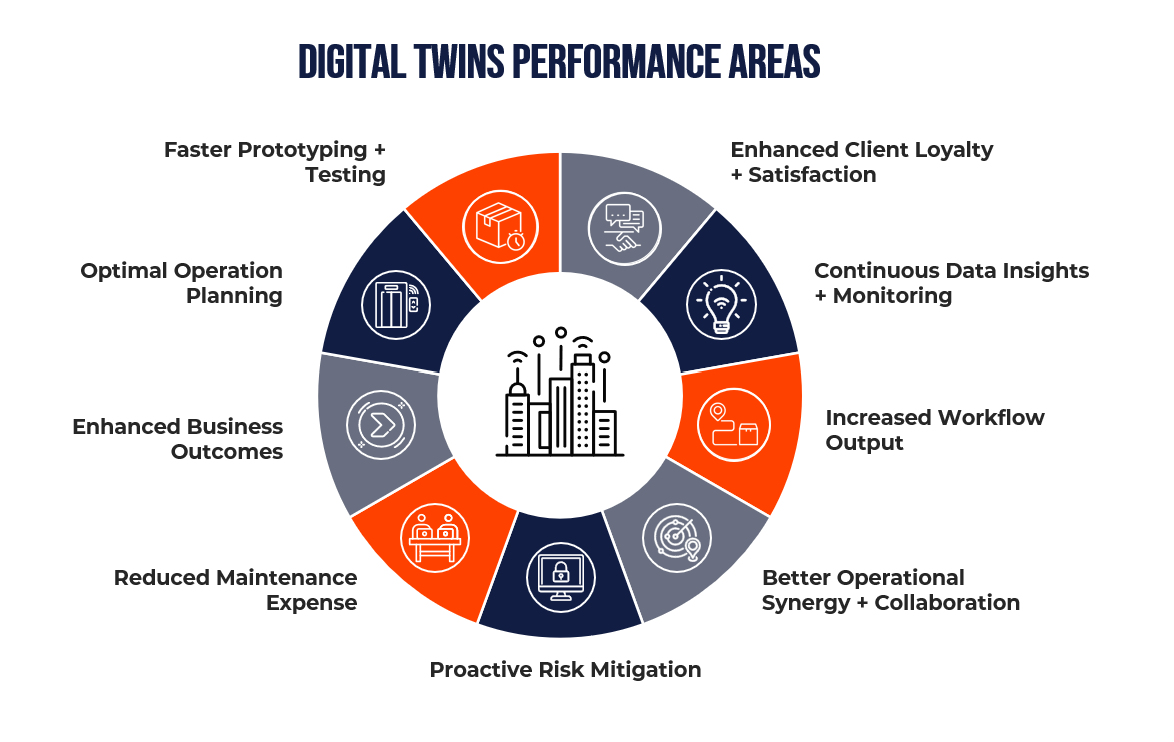
Moreover, implementing a twin at the "conception" phase rather than after construction can reduce rework and logistics costs by up to 80%. It ensures that the "digital thread" of the building stays intact from the first drawing to the final decommission.
Once a building is live, twins connected to IoT reduce energy consumption by 15–30% and maintenance costs by 10–25%. Instead of performing "preventative" maintenance on a schedule, teams perform "predictive" maintenance only when the data signals a need.
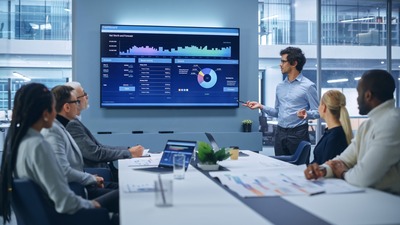
Autonomous processes do not occur in a day, from reactive to autonomous operation. They start with the ability to see, then progress to predicting, and finally graduate to self-healing behaviour with evident leadership. The possibility of such progression is based on the concept of digital twins. GenAI and intelligent reasoning algorithms are added as the means of turning wisdom into action. We are moving away from manual dashboards and toward automated decision-making.
With generative AI, twins can run thousands of stress tests on an asset in seconds, simulating everything from extreme weather events to a 50% increase in tenant occupancy and allowing for hyper-resilient design.
They are also evolving into "Building Operating Systems." They can automatically adjust HVAC loads based on real-time electricity prices or redirect maintenance bots to fix structural issues before they are visible to the human eye.
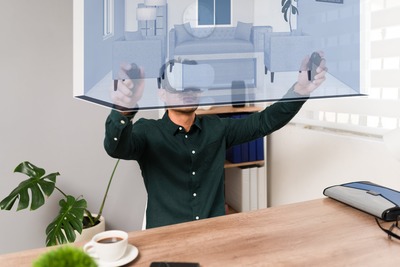
By integrating twins with AR/VR, facility managers can perform remote repairs or train new employees in a "virtual sandbox," reducing the risk of on-site accidents and improving operational speed.
Digital twins are no longer a "nice-to-have" visualization tool, but rather a "must-have" AI-powered, real-time simulation technology essential for modern property management. The role of the property manager is shifting from a passive "caretaker of concrete" to an active manager of dynamic data, utilizing IoT sensors and AI to listen to the "heartbeat" of their assets.

.jpeg)



.webp)



.jpeg)
.jpg)


.jpg)
.jpg)
.webp)
.jpg)
.jpeg)


.png)
.png)

.jpg)

.jpeg)
.jpeg)

.jpeg)
.jpg)
.jpg)
.png)

.jpg)
.jpeg)
.jpeg)
.jpeg)
.jpeg)

.jpeg)


.jpeg)

.jpg)
.jpeg)
.jpg)

.png)
.jpeg)


.jpg)


.jpeg)
.png)


.jpg)
.png)

.png)
.png)
.jpg)
.jpg)
.jpg)
.png)
.webp)
.png)
.jpg)
.jpg)

.png)


.jpg)

.jpeg)
.jpeg)

.png)
.png)
.png)
.jpeg)

.jpeg)
.png)