The PTC
min read
Published on
October 9, 2026
October 8, 2026



With over 700,000 to 800,000 hotels and resorts worldwide, the hotel industry is massive and largely decentralized. The 10 largest hotel companies in the world operate roughly 10% to 12% (~60,000 to 85,000) of these properties.
The global hotel market in 2026 is valued at approximately $2.08 trillion to $2.20 trillion. Following the severe disruption caused by COVID-19, the market entered a solid recovery phase, growing at a compound annual rate (CAGR) of over 7% into 2026.
During the height of the pandemic, Revenue per available room (RevPAR) dropped by as much as 80% compared to 2019 levels in many major cities. However, the industry has since moved past full recovery:
The hotel industry has proved resilient, shifting its focus from post-pandemic rebound to operational efficiency and yield growth.
Despite showing resilience, the hospitality industry is plagued with several issues. These include staffing, yield optimization, revenue management, and poor waste management - primarily single-use plastics. The industry, however, is not a laggard concerning tech adoption.
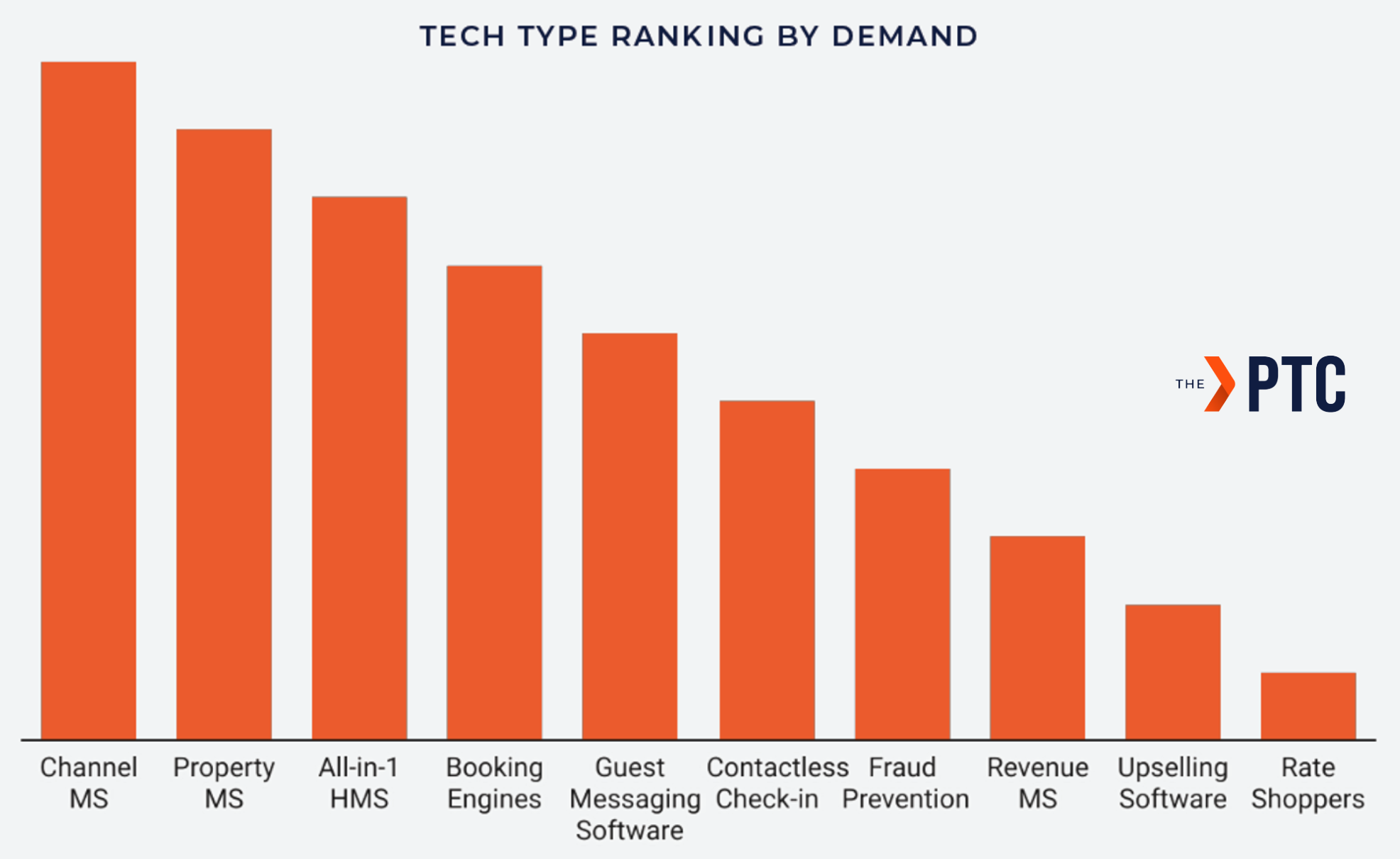
We are tracking 300 tech companies in this space, serving functions ranging from operations, revenue management, marketing, and guest experience. We have identified an area that has been a key focus point for hoteliers in 2024: channel managers.
Upscale, luxury hotels can achieve margins as high as 30% or more. Budget or mid-scale hotels, however, tend to post margins of approximately 10-20%. These hotels therefore may end up losing a significant portion of their revenue due to commissions paid to Online Travel Agencies (OTAs) or other indirect booking channels. Rate disparities can further reduce direct booking levels. Therefore, we are seeing an increase in investment in channel managers. Hoteliers worldwide aim to maximize direct bookings, and an increasing number of hoteliers are seeking to provide an omnichannel experience.
Seamless communication with guests has been a priority for the hospitality industry, with several inventions focused on optimizing guest experiences such as food and beverage (F&B) ordering, customer service, and entertainment. Many argue that technology takes away from traditional guest experiences, however, it also makes manual processes frictionless and aids hotels in providing more individualized and personalized experiences.
While hoteliers seek to maximize revenue and profit, an area that is often overlooked is waste management. Amidst pressure from customers, hotels need to manage their reputation regarding sustainability and waste management.
Some hotels are mastering waste management, some are currently setting goals, and some need a major push. For instance, 87% of the waste generated by hotels in the UK ends up in landfills.
Plastic waste is a major challenge. Only 9% of plastic waste globally is recycled, and almost 80% is sent to landfills. Tourists on average produce 1.6 kg of waste per day, a number which may seem small, but with 1.3 billion international tourists in 2023 alone, the need for efficient waste management is evident.
Another challenge is biodegradable food waste, an area that is still under-explored, which makes up 39% of waste generated by hotels and restaurants. Intelligent packaging, using advanced materials and sensors, can indicate food freshness and reduce premature disposal.
Additionally, technologies like composting systems and anaerobic digesters facilitate the conversion of organic waste into valuable compost or biogas, promoting a circular economy and reducing environmental impact.
Six Senses Case Study
Besides eliminating most single-use plastics from their hotels and spas globally, this Vietnam luxury resort launched the “Earth Lab” in 2018, an experiential initiative that has a coral reef restoration program. It teaches guests how to compost and make their own chemical-free detergent, and takes them to plantation fields and water treatment plants in an effort to raise awareness and inspire more sustainable habits.
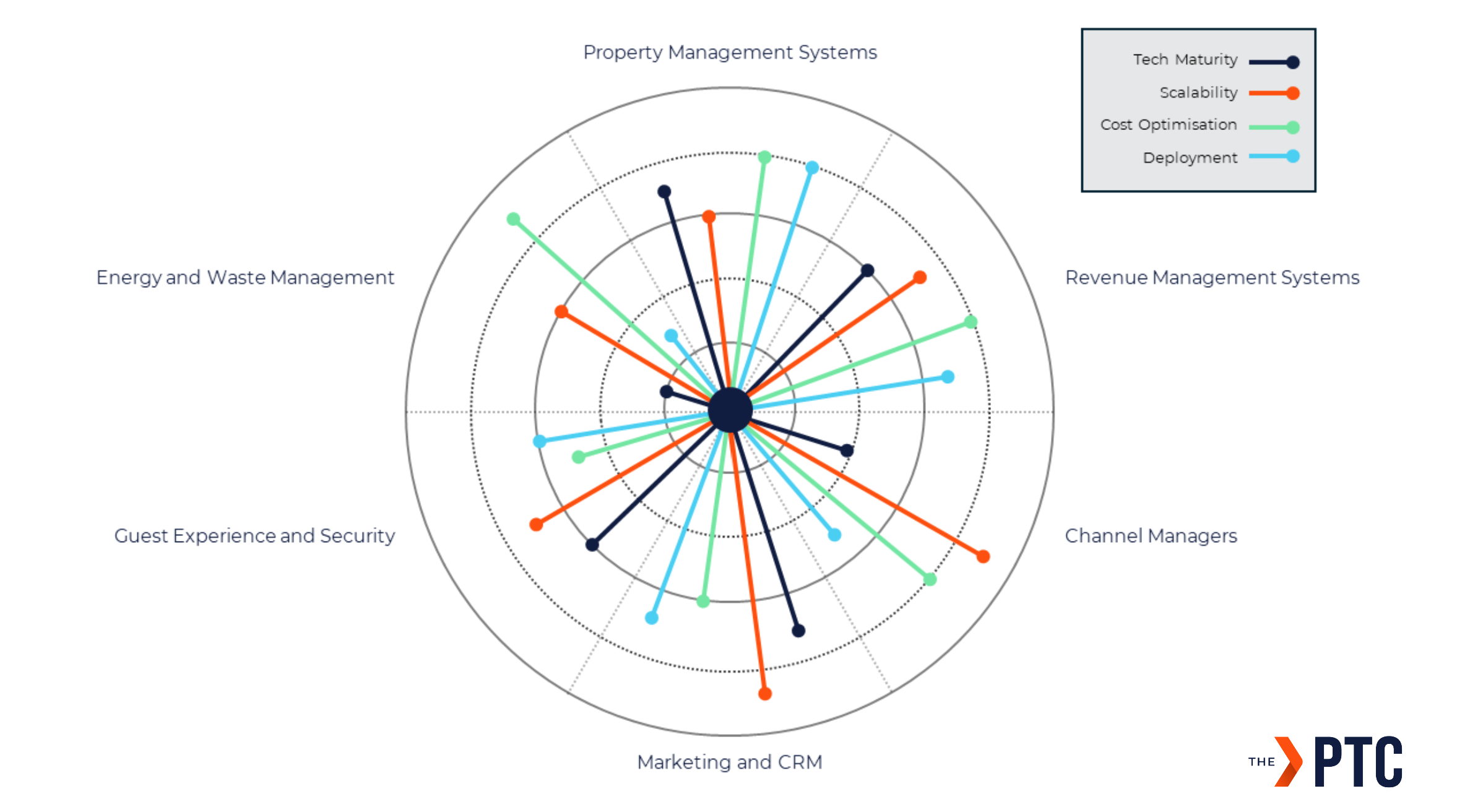
Property Management Systems (PMS)
Comprehensive software integrating HR, F&B, finance, housekeeping, and POS for efficient hotel operations management.
Revenue Management Systems (RMS)
Utilizing rate shopping, business intelligence, and parity management to optimize pricing and revenue strategies in the hospitality industry.
Channel Managers
Streamlining communication between hotels and guests across various booking platforms for seamless reservation management.
Guest Experience and Security
Enhancing guest satisfaction with keyless entries, in-room tablets, and entertainment options while ensuring security measures are in place to safeguard guest privacy.
Marketing and CRM
Encompassing booking engines, CRM systems, and digital marketing tools to enhance guest engagement and drive bookings.
Energy and Waste Management
Implementing solutions like composting, energy management systems, and IoT-based predictive analytics to reduce waste, conserve energy, and promote sustainability in hotel operations.
Hoteliers are increasingly prioritizing investments in technology, recognizing its potential to address industry challenges thereby enhancing operational efficiency and guest satisfaction. The focus on channel managers is expected to remain robust as hotels aim to regain control over pricing strategies and maximize direct bookings, especially in the wake of margin disparities between upscale luxury hotels and budget or mid-scale accommodations, highlighting the need for cost-effective solutions to minimize reliance on OTAs and indirect booking channels.
Guests do not want fully automated hotel experiences. The focus on channel managers highlights the importance of optimizing communication between hotels and guests.
The future of hospitality will primarily be focused on providing consumers with more personalized experiences, which will be bolstered by data-driven insights. Therefore, developing the "right" automation is more important than automating everything.
Sustainability will continue to emerge as a critical driver in the hospitality sector, with a growing emphasis on waste management practices to mitigate environmental impact and meet evolving consumer expectations for eco-conscious operations. We expect to see a shifting focus from primarily RMS to energy management systems, which will help reduce operational costs through the use of IoT-based sensing devices and predictive data analytics tools for use cases such as smart lighting systems and HVAC controls.
Furthermore, artificial intelligence will lead the charge in developing life-like chat bots and customer service experiences amidst a global shortage in hospitality staff. A "do more with less" attitude can be expected from hotels.
.jpeg)




.webp)




.jpeg)
.jpg)


.jpg)
.jpg)
.webp)
.jpg)
.jpeg)


.png)
.png)

.jpg)

.jpeg)
.jpeg)

.jpeg)
.jpg)
.jpg)
.png)

.jpg)
.jpeg)
.jpeg)
.jpeg)
.jpeg)

.jpeg)


.jpeg)

.jpg)
.jpeg)
.jpg)

.png)
.jpeg)


.jpg)


.jpeg)
.png)


.jpg)
.png)

.png)
.png)
.jpg)
.jpg)
.jpg)
.png)
.webp)
.png)
.jpg)
.jpg)



.png)



.jpg)


.jpeg)
.jpeg)

.png)
.png)
.png)
.jpeg)

.jpeg)
.png)