The PTC
5
min read
Published on
May 27, 2026
May 28, 2026



eVTOLs (electric Vertical Takeoff and Landing aircraft) are essentially electric air taxis — aircraft that can take off like a helicopter and fly like a plane. You may have heard of it, or read about it, but what's the real story?
And why do we believe this may result in a completely new asset class for Real Estate?
Last Monday I attended an event in Florida (State part of FAA pilot project aimed at accelerating the adoption of advanced air mobility ("AAM") across the state). Florida was selected as one of eight pilot projects in the country, alongside major markets such as New York and others referenced in this article.
The eVTOL story is usually framed around aircraft. But the larger long-term opportunity may be real estate. We, at The Proptech Connection, are very closely involved in this space. As an example we are working with one of the 3 largest institutional real estate owners (globally) to create a mobility platform of the future that integrates autonomous vehicles, eVTOLs and drone (delivery) for underperforming shopping mall assets.
Urban air mobility (UAM) will require an entirely new layer of infrastructure: vertiports, rooftop landing hubs, charging networks, and multimodal transit nodes integrated into cities. Over time, that infrastructure could evolve into a distinct institutional real estate asset class — similar to how data centers and logistics warehouses emerged from earlier technological shifts.
The market signals are already significant.
Industry forecasts project the global vertiport market could grow from under $1 billion today to between $8 billion and $40+ billion over the next decade, depending on adoption rates. Meanwhile, estimates for the broader urban air mobility market range from roughly $90 billion to more than $1 trillion by 2040.
What makes this important from a real estate perspective is network density.
Unlike traditional aviation, eVTOL systems require distributed urban infrastructure rather than centralized airports. Research evaluating nearly 1,000 cities globally found that adoption depends heavily on vertiport density and proximity. In practical terms, the scarce asset is not just the aircraft — it is access to strategically located landing sites.
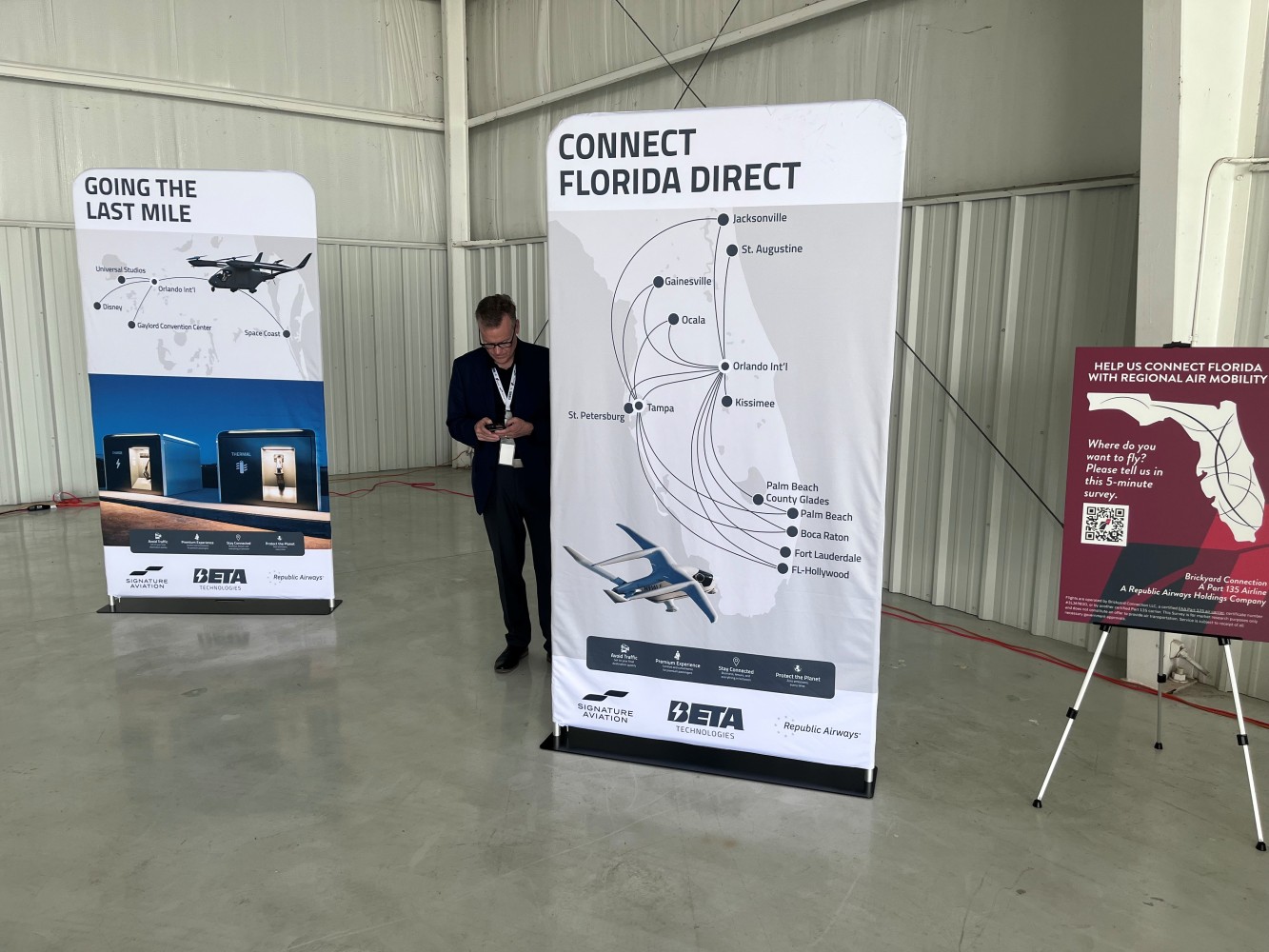
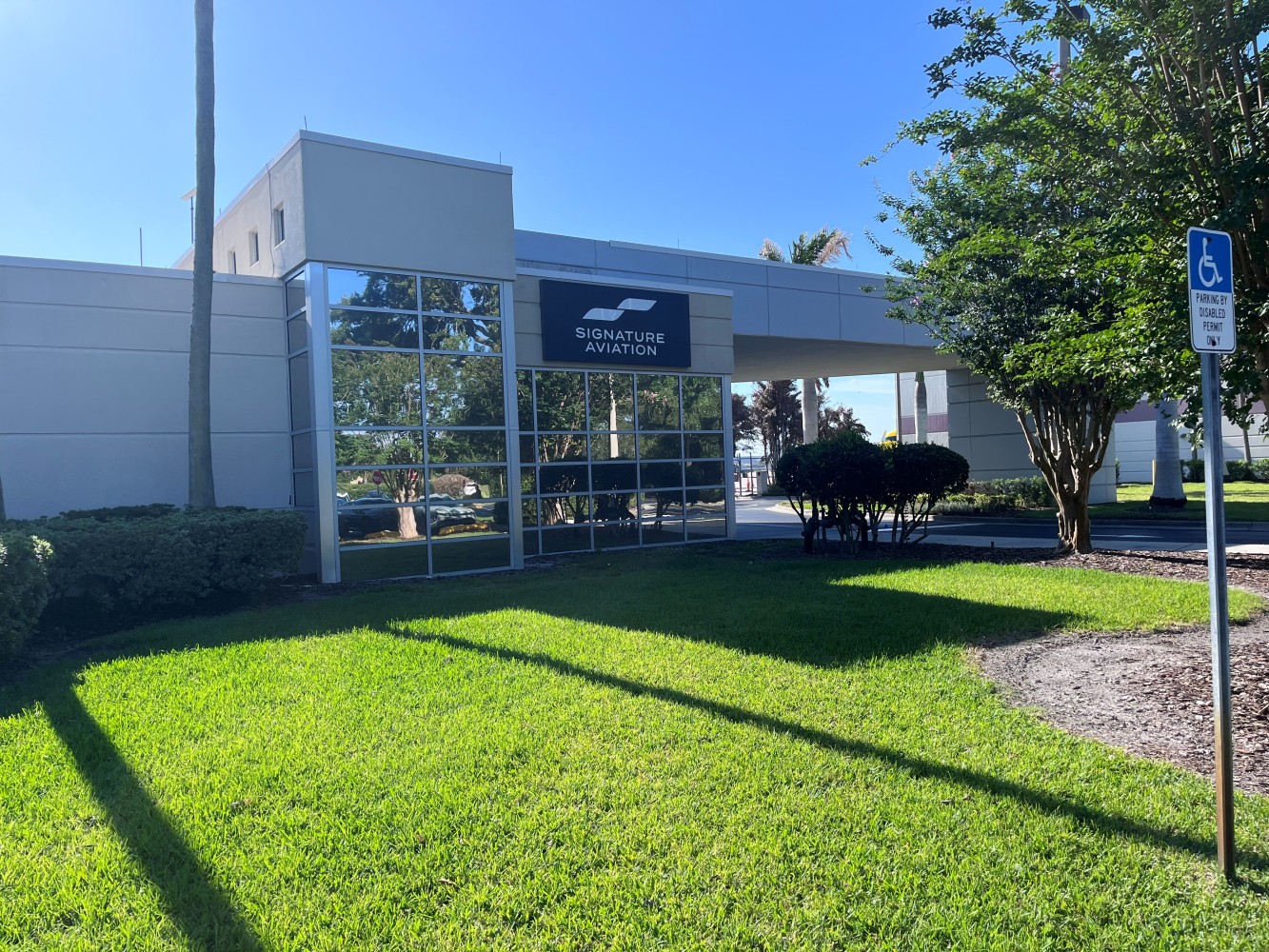
This initiative is particularly important because Florida is one of the states most supportive of advanced air mobility. Public funding for infrastructure has already been approved, and key ecosystem players, such as for example UrbanV and Signature Aviation are working to develop a nationwide network of AAM infrastructure starting from Florida.
At the event, Brickyard Connection — the new advanced mobility brand launched by Republic Airways, the largest regional airline in the U.S.A. — presented its plans to operate Beta eCTOL aircraft manufactured by Beta Technologies, a NASDAQ-listed company leading the development of electric aviation technologies.
Seeing the aircraft in person was impressive, especially how quiet they are during operations.

The event brought together industry leaders, representatives from the Department of Transportation, airport authorities, and many public stakeholders who are strongly supporting the development of this sector.
The event was hosted by the Greater Orlando Aviation Authority (GOAA), which operates the largest airport systems in Florida and is becoming a leading player in supporting AAM infrastructure development. GOAA is also among the first airport authorities in the U.S.A. to launch a public process for vertiport development, shortly before a similar initiative started at LaGuardia Airport in New York. It is likely a lot more will be coming, and that will eventually result in every airport having their "own" AAM Infrastructure.

We expect the market to evolve in phases: first with the deployment of electric charging infrastructure for electric aircraft at FBOs and airports across the U.S., then with the development of dedicated on-airport vertiports, and ultimately with off-airport vertiports that will complete the “last mile” connection to final destinations such as malls, residential communities, and business districts.
The long-term vision is that passengers could eventually travel from places like shopping centers or neighborhoods directly to airports using electric aircraft integrated into the broader transportation network.
We would also add that a significant amount of capital has already been invested in original equipment manufacturers (OEMs) and aircraft production — close to $10 billion.
However, the major wave of investment in infrastructure is still ahead of us. We are now entering the phase where infrastructure deployment becomes critical to avoid bottlenecks, because infrastructure will ultimately be one of the main limiting factors for scaling advanced air mobility operations.
That creates a new category of “aerial-accessible real estate. Only a limited number of urban locations will meet the requirements for eVTOL operations: structural load capacity, FAA approvals, energy availability, noise compliance, passenger throughput, and integration into air corridors.
As a result, premium vertiport sites are likely to cluster around: airports, CBD office districts, luxury hospitality, healthcare campuses, logistics hubs, and affluent suburban corridors.
The economics resemble other infrastructure-heavy real estate sectors. Vertiports are likely to monetize multiple revenue streams simultaneously: landing fees, charging infrastructure, passenger processing, retail/concessions, maintenance, fleet storage, and software/network access.
Operationally, they may look less like heliports and more like hybrid assets combining transportation terminals, EV charging infrastructure, and logistics facilities.
There is also a strong historical parallel with logistics real estate. Before e-commerce scaled, warehouses were viewed as low-value industrial assets. Today, proximity-driven logistics facilities are among the most valuable industrial real estate categories globally.
Importantly, early adoption does not require mass-market passenger volumes. Initial routes will likely focus on airport transfers, corporate travel, medical transport, and high-income commuters, allowing vertiports to generate premium economics with relatively low throughput.
The broader implication is that eVTOL may ultimately create more value in infrastructure ownership than in aircraft manufacturing itself.
Historically, transportation revolutions have consistently produced new real estate categories: railroads created rail hubs, highways created logistics corridors, cloud computing created data center REITs.
Urban air mobility could create the next version: vertically integrated aerial mobility infrastructure as a standalone real estate asset class.

.jpeg)




.webp)





.jpeg)
.jpg)


.jpg)
.jpg)
.webp)
.jpg)
.jpeg)


.png)
.png)

.jpg)

.jpeg)
.jpeg)

.jpeg)
.jpg)
.jpg)
.png)

.jpg)
.jpeg)
.jpeg)
.jpeg)
.jpeg)

.jpeg)


.jpeg)

.jpg)
.jpeg)
.jpg)

.png)
.jpeg)


.jpg)


.jpeg)
.png)


.jpg)
.png)

.png)
.png)
.jpg)
.jpg)
.jpg)
.png)
.webp)
.png)
.jpg)
.jpg)





.jpg)


.jpeg)
.jpeg)

.png)
.png)
.png)
.jpeg)

.jpeg)
.png)